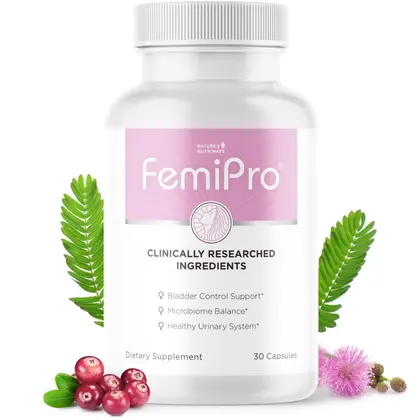
- Description FemiPro capsules are a premium solution for urinary health support. With a 100% natural formula, they work to rebalance your body. Designed to offer control and overall health, the capsules were developed with advanced technology, guaranteeing effectiveness. Each dose provides optimized support, promoting well-being and comfort. These capsules stand out for their unique combination of active ingredients, which work synergistically to strengthen your natural defenses. Regular use improves urinary function and reduces associated discomfort. By choosing FemiPro, you invest in quality and reliable results, promoting a healthy lifestyle. The capsules are produced in facilities with rigorous quality control, ensuring that you receive a safe and effective product. Try FemiPro and feel the difference in your daily life. A smart choice for those seeking natural and effective support.

FemiPro Capsules, Premium Formula for Urinary Health Support, 100% Natural Supplement for Control and Overall Health, Femi Pro Reviews (60 Capsules)
femipro
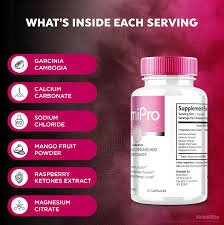
Inside each capsule of "FemiPro" you will find: A unique blend of nutritious ingredients, with optimal dosage, carefully combined to complement each other in a powerful formula.
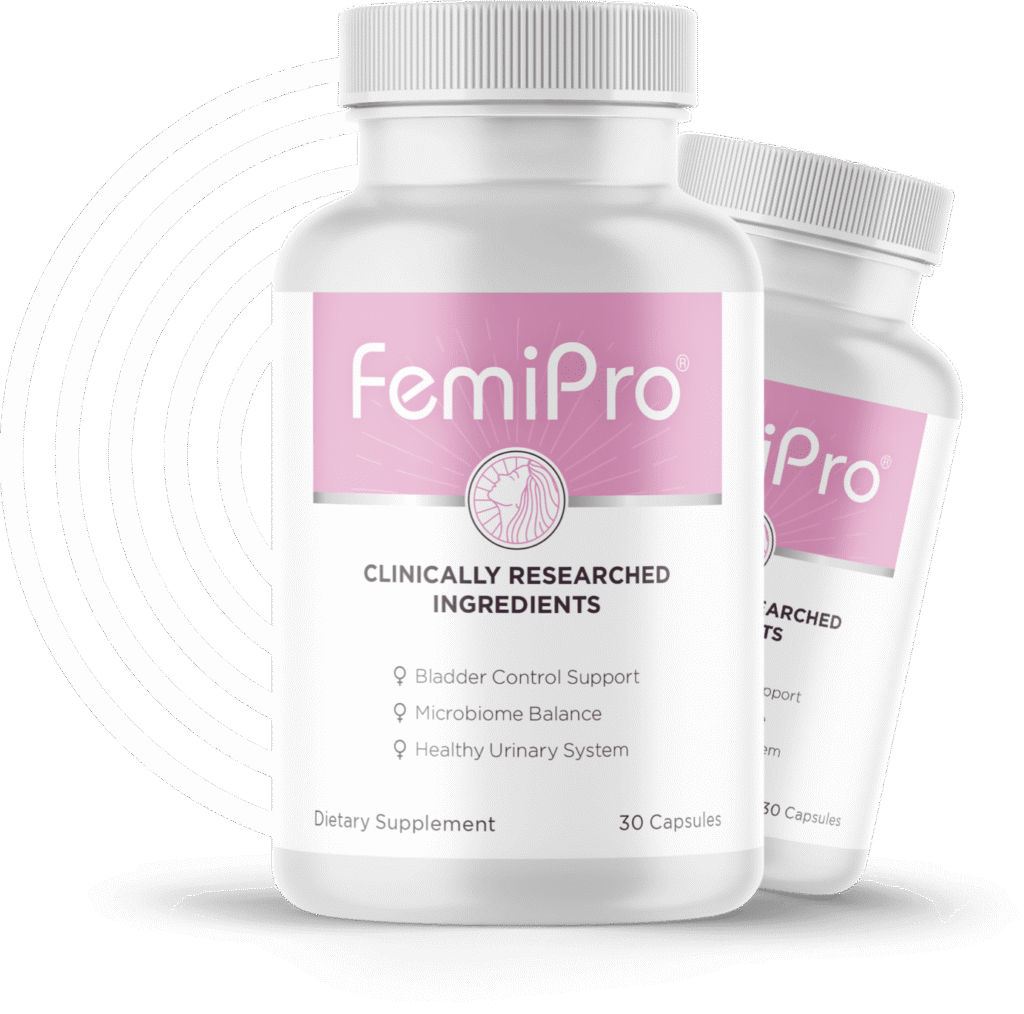
FemiPro contains unique ingredients developed to promote the healthy balance of bacteria in the urinary microbiome, including the vagina, urinary tract and bladder. It acts against harmful bacteria that can cause sudden leakage of urine by excessively stimulating the muscles of the bladder. By promoting beneficial bacteria, our formula helps reduce these involuntary leaks and improve urinary health.
Get your FemiPro at a discount while stocks last!

Scientific references
Carnes MU, Siddiqui NY, Karstens L, Gantz MG, Dinwiddie DL, Sung VW, Bradley M, Brubaker L, Ferrando CA, Mazloomdoost D, Richter HE. Types of urinary microbiome communities associated with the severity of urinary incontinence in women. American Journal of Obstetrics and Gynecology. 2024 Mar 1;230(3):344-e1. doi:10.1016/j.ajog.2023.10.036.
Diaz A. “Call a fucking lawyer!”: TikTok users make serious warning about common ingredient in tampons [Internet]. New York Post; 2022 [cited April 9, 2024].
Govender Y, Gabriel I, Minassian V, Fichorova R. Current evidence on the association between urinary microbiome and urinary incontinence in women. Frontiers in Cellular and Infection Microbiology. 2019 May 1;9:133. doi:10.3389/fcimb.2019.00133.
Heid M. The truth about his absorbents [Internet]. Time; 2016 [cited April 9, 2024].
Komesu YM, Richter HE, Carper B, Dinwiddie DL, Lukacz ES, Siddiqui NY, Sung VW, Zyczynski HM, Ridgeway B, Rogers RG, Arya LA, Mazloomdoost D, Gantz MG; Floor Disturbance Network. The urinary microbiome in women with mixed urinary incontinence compared to controls of similar age. International Urogynecology Journal. 2018 Dec;29(12):1785-1795. doi:10.1007/s00192-018-3683-6.
Mandal AK, Pandey A, Sah RK, Baral A, Sah P. In vitro antioxidant and antimicrobial potential of Mimosa pudica from the Terai region of Nepal: an insight into L-mimosin as an antibacterial agent. Evidence-Based Complementary and Alternative Medicine. 7 October 2022;2022:6790314. doi:10.1155/2022/6790314.
Mei Z, Li D. The role of probiotics in vaginal health. Frontiers in Cellular and Infection Microbiology. 2022 Jul 28;12:963868. doi:10.3389/fcimb.2022.963868.
Meštrović Popovič K, Povalej Bržan P, Langerholc T, Marčun Varda N. The impact of supplementation with Lactobacillus Plantarum PCS26 on treatment and recurrence of urinary tract infections in children – a pilot study